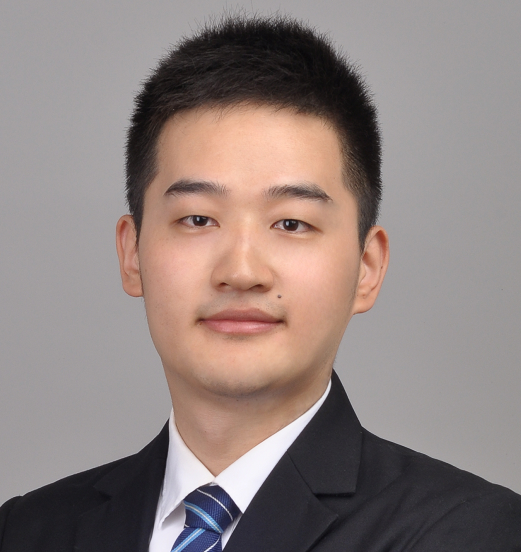
- I am an associate researcher (postdoctor) at the Institute of Artificial Intelligence, Hefei Comprehensive National Science Center. My collaborative supervisors are Prof. Qi Liu, and Prof. Xun Chen.
- I received my Ph.D. degree in Data Science from the University of Science and Technology of China in July 2024, supervised by Prof. Enhong Chen, and received my Bachelor degree in Measurement and Control Technology and Instrument from Wuhan University in July 2018.
- My research interests include data mining, knowledge discovery, user modeling, and intelligent education. If you have any questions regarding my research, or may be interested in potential collaboration, or would like to discuss any other matters, please do not hesitate to contact me. I look forward to the opportunity to cooperate with you.
📝 Selected Publications
( ✉ Corresponding Author, † Equal Contribution )

Towards Fine-grained Knowledge Tracing by Hierarchical Fusion of Multiple Question Attributes
Shuanghong Shen, Qi Mo, Zhenya Huang, Yu Su, Linbo Zhu, Junyu, Qi Liu.
ACM Transactions on Information Systems, 2026, accepted. [J]
Knowledge tracing models typically treat each question as a single knowledge concept, ignoring the rich multi-attribute structure of real exam questions. This paper proposes a hierarchical fusion approach that jointly encodes multiple question attributes (e.g., concept tags, difficulty, type) at different granularities, enabling finer-grained modeling of student knowledge states and improving prediction accuracy on standard benchmarks.
GLP-fusion: A Hierarchical Multimodal Fusion Framework for Robust Student Engagement Prediction
Zixuan Qin, Shuanghong Shen✉, Dengdi Sun, Keyu Zhu, Zhenya Huang, Qi Liu, Shijin Wang.
IEEE Transactions on Multimedia, 2026, accepted. [J]
Accurately predicting student engagement in online learning is challenging due to the heterogeneity of multimodal signals (video, audio, physiological). GLP-fusion introduces a hierarchical fusion framework that progressively integrates global context, local temporal dynamics, and personal behavioral patterns, achieving robust engagement prediction even under noisy or missing modality conditions.
LLM-EPSP: Large language model empowered early prediction of student performance
Huawei Zhou, Shuanghong Shen✉, Yu Su, Yongchun Miao, Qi Liu, Linbo Zhu, Junyu Lu, Zhenya Huang.
Information Processing & Management, 2026, 63(1): 104351. [J]
Early prediction of student performance allows timely intervention, but existing methods struggle to leverage the rich semantic information in course materials and student interactions. LLM-EPSP harnesses large language models to extract deep semantic features from learning records, significantly improving early-stage prediction accuracy and providing interpretable risk signals for educators.
Practicing in quiz, assessing in quiz: A Quiz-based neural network approach for knowledge tracing
Shuanghong Shen, Qi Liu, Zhenya Huang, Linbo Zhu, Junyu Lu, Kai Zhang.
Neural Networks, 2025: 107797. [J]
Traditional knowledge tracing models focus on individual question-answer interactions, overlooking the structured nature of quizzes as a learning unit. This paper proposes a quiz-centric neural network that models both intra-quiz dependencies and inter-quiz knowledge evolution, better reflecting how students actually practice and are assessed in real educational scenarios.
Harnessing code domain insights: Enhancing programming Knowledge Tracing with Large Language Models
Xinjie Sun, Qi Liu, Kai Zhang, Shuanghong Shen✉, Lina Yang, Hui Li.
Knowledge-Based Systems, 2025, 317: 113396. [J]
Programming knowledge tracing is uniquely challenging because code exercises carry rich structural and semantic information beyond simple right/wrong labels. This paper leverages LLMs to extract code domain insights—such as algorithmic concepts and error patterns—as auxiliary signals, substantially enhancing the accuracy of tracing students' programming skill acquisition.
Zixiao Kong, Xianquan Wang, Shuanghong Shen✉, Keyu Zhu, Huibo Xu, Yu Su.
Proceedings of the AAAI Conference on Artificial Intelligence. 2025, 39(23): 24339-24347. [C]
Chinese academic writing contains domain-specific grammatical patterns that general GEC systems fail to handle well. ScholarGEC introduces a controllable LLM-based framework that incorporates academic style constraints and error-type guidance, enabling more precise and context-aware grammatical error correction tailored to scholarly Chinese text.
Mitigating Redundancy in Deep Recommender Systems: A Field Importance Distribution Perspective
Xianquan Wang, Likang Wu, Zhi Li, Haitao Yuan, Shuanghong Shen✉, Huibo Xu, Yu Su, Chenyi Lei.
Proceedings of the 31st ACM SIGKDD Conference on Knowledge Discovery and Data Mining V. 1. 2025: 1515-1526. [C]
Deep recommender systems often suffer from feature redundancy across input fields, leading to wasted model capacity and degraded performance. This paper analyzes the problem from a field importance distribution perspective and proposes a principled method to identify and suppress redundant fields, yielding more efficient and accurate recommendations on large-scale industrial datasets.
A Survey of Knowledge Tracing: Models, Variants, and Applications
Shuanghong Shen, Qi Liu, Zhenya Huang, Yonghe Zheng, Minghao Yin, Minjuan Wang, Enhong Chen.
IEEE Transactions on Learning Technologies, 2024, 17: 1858-1879. [J]
This comprehensive survey systematically reviews over 100 knowledge tracing models, organizing them into a unified taxonomy covering deep learning-based, cognitive theory-inspired, and graph-based variants. It also summarizes key datasets, evaluation protocols, and open challenges, serving as a thorough reference for researchers entering the intelligent education field.
Constructing a Confidence-guided Multigraph Model for cognitive diagnosis in personalized learning
Yu Su, Ze Han, Shuanghong Shen✉, Xuejie Yang, Zhenya Huang, Jinze Wu, Huawei Zhou, Qi Liu.
Expert Systems with Applications, 2024, 252: 124259. [J]
Cognitive diagnosis aims to infer students' mastery of fine-grained knowledge concepts, but existing models often ignore the uncertainty in student responses. This paper constructs a confidence-guided multigraph model that explicitly captures response confidence alongside concept relationships, leading to more reliable and interpretable cognitive diagnosis for personalized learning.
Global and Local Neural Cognitive Modeling for Student Performance Prediction
Yu Su, Shuanghong Shen✉, Enhong Chen, Qi Liu, Zhenya Huang, Wei Huang, Yu Yin, Yu Su, Shijin Wang.
Expert Systems with Applications, 2024, 237: 121637. [J]
Student performance prediction requires capturing both long-range learning trends and short-term behavioral fluctuations. This paper proposes a dual-branch neural cognitive model that jointly learns global learning trajectories and local interaction patterns, outperforming single-scale baselines and providing richer representations for downstream educational applications.
Monitoring Student Progress for Learning Process-Consistent Knowledge Tracing
Shuanghong Shen, Enhong Chen, Qi Liu, Zhenya Huang, Wei Huang, Yu Yin, Yu Su, Shijin Wang.
IEEE Transactions on Knowledge and Data Engineering, 2023, 35(8): 8213-8227. [J]
Existing knowledge tracing models often fail to maintain consistency between a student's observed learning behaviors and their predicted knowledge state. This paper introduces a progress monitoring mechanism that tracks learning dynamics over time and enforces process-consistent constraints, resulting in more coherent and accurate knowledge state estimation published in IEEE TKDE.
Assessing Student’s Dynamic Knowledge State by Exploring the Question Difficulty Effect
Shuanghong Shen, Zhenya Huang, Qi Liu, Yu Su, Shijin Wang, Enhong Chen.
Proceedings of the 45th international ACM SIGIR conference on research and development in information retrieval. 2022: 427-437. [C]
Question difficulty is a critical but often overlooked factor in knowledge tracing. This SIGIR paper proposes a difficulty-aware model that explicitly disentangles the effect of question difficulty from student ability, enabling more accurate and interpretable assessment of students' dynamic knowledge states across varying difficulty levels.
Learning Process-consistent Knowledge Tracing
Shuanghong Shen, Qi Liu, Enhong Chen, Zhenya Huang, Wei Huang, Yu Yin, Yu Su, Shijin Wang.
Proceedings of the 27th ACM SIGKDD conference on knowledge discovery & data mining. 2021: 1452-1460. [C]
Standard knowledge tracing models treat student responses as independent events, ignoring the inherent consistency constraints of a real learning process (e.g., a student who masters a concept should not regress without cause). This KDD paper formalizes learning process consistency as an explicit training objective, significantly improving both predictive performance and the interpretability of traced knowledge states.
Convolutional Knowledge Tracing: Modeling Individualization in Student Learning Process
Shuanghong Shen, Qi Liu, Enhong Chen, Han Wu, Zhenya Huang, Weihao Zhao, Yu Su, Haiping Ma, Shijin Wang.
Proceedings of the 43rd international ACM SIGIR conference on research and development in information retrieval. 2020: 1857-1860. [C]
Different students exhibit distinct learning patterns even when studying the same material. This SIGIR paper proposes a convolutional knowledge tracing model that uses local convolutional filters to capture individualized learning behaviors within sequential interaction data, offering a lightweight yet effective alternative to recurrent architectures.
🎖 Honors and Awards
- 2023: The Special Prize of President Scholarship of Postgraduate Students.
- 2023: China National Scholarship.
- 2023: Best Applied Paper of CCF BigData2023.
- 2023: Top 1 in the AAAI’2023 Global Knowledge Tracing Challenge.
- 2023: Top 4 in Task 2 of the Baidu 2023 CTI Challenge.
- 2022: Top 1 in Task 4 of the NeurIPS’2022 CausalML Challenge.
- 2022: Top 1 in Track 1 and Track 2 of the first phase, and Top 1 in Track 1, Top 2 in Track 2 of the second phase, of the EDM’2022 2nd CSEDM Data Challenge.
- 2021: Top 10 in Task 1 of the Tecent 2021 Advertising Algorithm Challenge.
- 2020: Top 1 in Task 2 of the NeurIPS 2020 Education Challenge.
📖 Educations
- 2018.09 - 2024.06, School of Artificial Intelligence and Data Science, University of Science and Technology of China.
- 2014.09 - 2018.06, School of Electronic Information, Wuhan University.
💬 Services
-
Journal Reviewer
- IEEE Transactions on Knowledge and Data Engineering
- IEEE Transactions on Neural Networks and Learning Systems
- IEEE Transactions on Systems, Man, and Cybernetics publication information
- IEEE Transactions on Learning Technologies
- IEEE Transactions on Emerging Topics in Computational Intelligence
- ACM Transactions on Information Systems
- Expert Systems with Applications
- Knowledge-Based Systems
- Information Processing and Management
-
Program Committee Member
- SIGIR
- AAAI
- KDD
- IJCAI
- TheWebConf
💻 Internships
🔥 News
- 2026.04: 🎉🎉 One paper accepted by SIGIR 2026.
- 2026.01: 🎉🎉 One paper accepted by ACM Transactions on Information Systems.
- 2025.12: 🎉🎉 One paper accepted by IEEE Transactions on Multimedia.
- 2025.08: 🎉🎉 One paper accepted by Information Processing & Management.
- 2025.07: 🎉🎉 One paper accepted by Neural Networks.
- 2025.04: 🎉🎉 One paper accepted by Knowledge-Based Systems.
- 2024.12: 🎉🎉 One paper accepted by AAAI 2025.
- 2024.11: 🎉🎉 One paper accepted by KDD 2025.